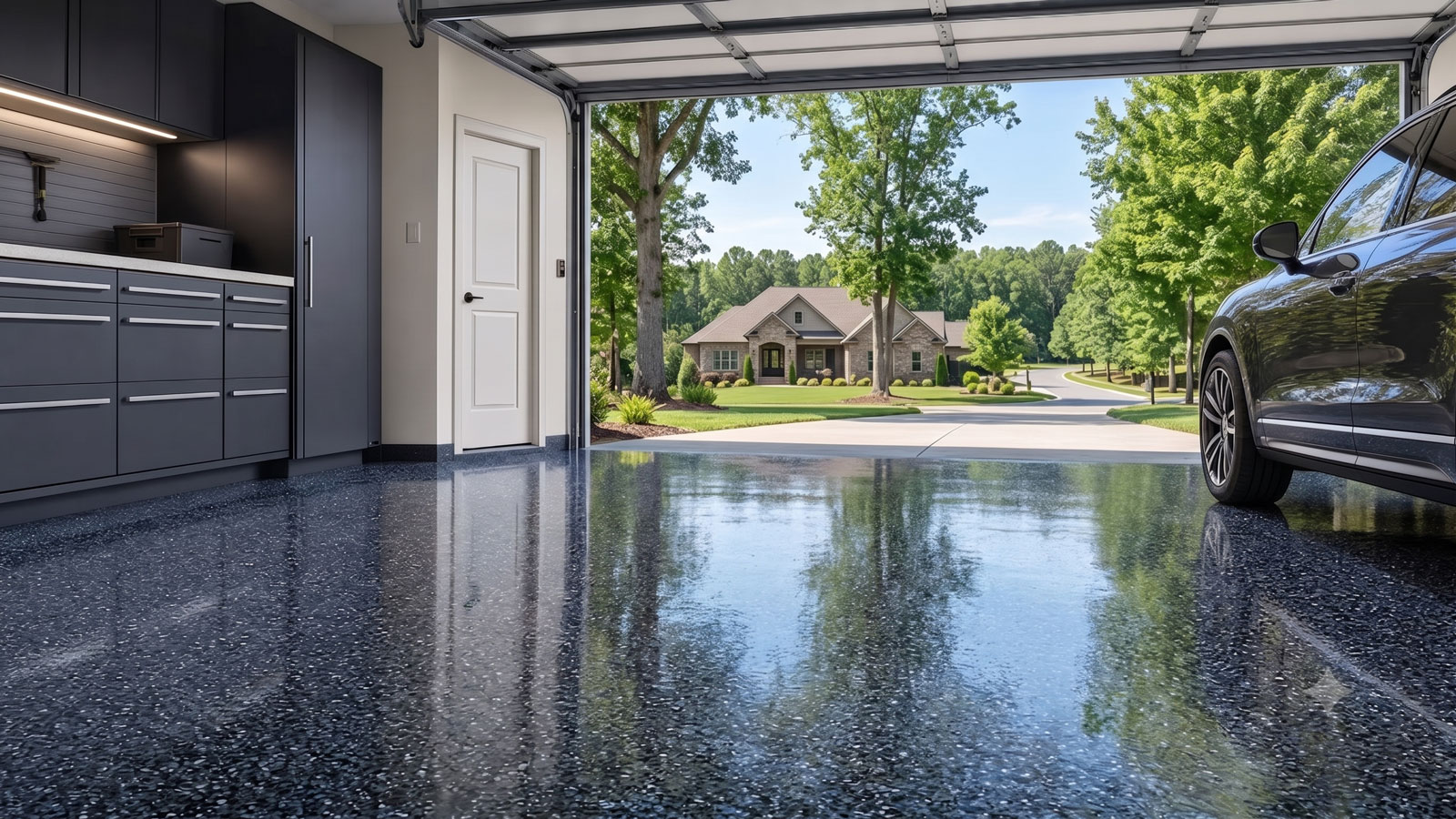
Garage Floor Coating in Suwanee, GA
Floor Coating Services in Suwanee, GA
Suwanee's garage floors belong to a community that has deliberately distinguished its historic Old Town from newer Town Center and suburban neighborhoods. The city's 2040 Comprehensive Plan was adopted February 14, 2019, with amendments in March 2021 and March 2024. Its vision places denser, more walkable development near Town Center and smaller-scale historic development in Old Town, while established neighborhoods retain suburban patterns. That variation makes garage construction history important: an older home can have a replacement slab, while a new floor can still need sealer removal and grinding.
Stormwater and local creek landscapes provide a second relevant consideration. Suwanee's growth and greenway planning must address runoff across new and existing development, but public land-use character areas cannot determine whether any particular garage is damp. A homeowner should inspect driveway slope, downspouts, threshold staining and persistent concrete moisture rather than assume uniform risk.
A properly applied epoxy, polyaspartic or decorative-flake system may improve cleanability on sound, well-prepared concrete. Before selecting finish texture or cure speed, check existing paint, oil, cracks, joints, past repairs and garage access. A coating does not replace drainage correction or stabilize moving concrete.
Local Market Insight
Suwanee's 2040 plan was adopted in February 2019 and amended in 2021 and 2024. It explicitly separates historic Old Town, Town Center, Suwanee Gateway and suburban neighborhoods, creating different garage histories and runoff settings that demand actual slab inspection.
What Affects the Cost of Garage Floor Coating in Suwanee?
An Old Town Suwanee garage may have paint, replacement concrete and limited equipment access, while a later attached neighborhood bay may carry curing compounds and control joints. Both can need substantial preparation despite similar square footage.
Town Center growth and greenway plans are public context, not a moisture diagnosis. Ask for any exterior water-path correction, old-finish removal, cracks, edge work and coating layers to be identified independently.
- Old Town and later slab history: Suwanee's distinct historic, Town Center and suburban settings can contain garages from different periods. Inspect slab repairs, previous finishes and later pours rather than pricing from location alone.
- Paint and construction sealer: Long-used floor paint, workshop oil and builder treatments can affect bonding. The quote should specify removal and mechanical profiling for the proposed resin system.
- Actual runoff and drainage: Public greenway and stormwater planning do not establish private slab moisture. Check driveway grade, roof outlets, old water marks and dampness after dry weather.
- Cracks and floor transitions: Repaired sections, joints, damaged entrances and actively moving concrete need different treatments. Ask which defects can be addressed during preparation.
- Garage staging and storage: Compact Old Town lots, busy family garages and finished transitions affect equipment access, masking, storage clearing and temporary parking.
- Traction and cure timing: Summer rain, wet footwear and regular parking make texture and system compatibility important. Confirm weather limits, layers and manufacturer-based vehicle-return time.
Call for a clear, project-specific estimate — or request one online.
Old Town, Town Center and Suwanee's Different Garage Histories
Suwanee adopted its 2040 Comprehensive Plan in February 2019 and amended it in March 2021 and March 2024. The plan draws explicit distinctions among historic Old Town, denser walkable Town Center, Suwanee Gateway and established suburban neighborhoods. These distinctions document real development patterns rather than guaranteeing that any one garage floor was installed with its house.
In Old Town, an older garage can have later replacement concrete or several layers of paint. In suburban neighborhoods, a more recent bay may have smooth curing sealer or a previous homeowner's epoxy. A Town Center garage can present different access or parking arrangements. Inspect actual surface films, patches, joints, tire-path wear and spalled edges before recommending a coating.
Installation logistics matter. Storage cabinets, narrow entries, steps and busy parking spaces can require additional clearing and staging. Ask whether an estimate includes stripping, concrete grinding, stable crack repair, perimeter detail and all coats. The floor's usable area is only one part of preparation labor.
A decorative flake finish can be attractive and easier to maintain, but it cannot create a reliable bond over unsuitable paint or repair structural movement. Homeowners should compare the proposed substrate work and real vehicle-return plan rather than treating all Suwanee neighborhoods as the same kind of floor.
Suwanee Growth, Stormwater and Water at the Garage Door
Suwanee's 2040 planning framework addresses its Town Center, greenways, parks and connections to established housing as growth continues. That is a real public development and water-resource context, but neither the plan's character-area maps nor greenway routes establish whether rainfall enters one residential garage.
Start with the driveway and roof. Does water run downhill toward the overhead door? Are downspouts or drains obstructed, and have stains appeared at the threshold? Inside, peeling floor paint or persistent damp areas can indicate something different from wet tire marks. Exterior entry and internal concrete moisture require separate evaluation, neither solved merely by adding a resin topcoat.
Garages also collect summer rainwater, tracked grit, bicycles, tools and automotive residue in normal use. A properly bonded coating can improve cleanability, but regular sweeping and removal of standing liquid remain necessary. Texture should be matched to wet footwear and the way household traffic enters.
If outside water reaches the floor, address the grade or drain first. If slab moisture is suspected, evaluate compatibility with the proposed coating. Then detail mechanical profiling, film removal, cracks, joints, layers and realistic return-to-use times. Suwanee's planning differences should lead to practical inspection questions rather than generic claims of a local moisture problem.
Frequently Asked Questions
Does Suwanee Old Town automatically mean an old garage slab?
No. An older building may have been renovated or received a new floor. Inspect paint, prior repairs, joints and actual concrete before estimating preparation.
Are Town Center garages identical to suburban garage floors?
No. Access, construction period, coatings and garage use can differ. Suwanee's land-use plan distinguishes those settings, but individual slab inspection determines coating requirements.
Can epoxy prevent rainwater crossing a garage threshold?
No. Exterior grading, gutters or drainage must be corrected when runoff enters. A coating does not substitute for water-management repairs.
What should a Suwanee estimate include?
Compare coating removal, grinding, crack and joint treatment, edge work, moisture checks when warranted, full layers, texture, storage clearing and manufacturer-based return-to-parking time.
Does flake coating eliminate regular cleaning?
No. It can make sound concrete easier to maintain, but tracked rainwater, road grime and workshop debris still require sweeping and removal.
Suwanee Neighborhoods & Local Context
Phone Quote Line
Speak with a floor coating specialist about your project and get a realistic estimate range.
(770) 685-6619Typical Project Cost
$3,000–$5,500
Typical range for a two-car garage. Final pricing depends on floor size, concrete condition, prep work, coating type, and finish options.
Helpful Guides
Other Service Areas