Garage Floor Coating in Atlanta, GA
Floor Coating Services in Atlanta, GA
Atlanta's floor-coating market spans established neighborhoods, infill redevelopment and later residential districts rather than one uniform type of garage. The city adopted an update to its Plan A comprehensive development plan in July 2025, following previous citywide plans from 2011, 2016 and 2021. A detached garage behind an older house may contain repoured concrete, several coatings or repaired cracks. A newer attached floor can still retain curing treatments and require mechanical profiling before any finish is applied.
Water infrastructure offers a second local theme. Atlanta's Peachtree Creek sewer basin has undergone substantial improvements, including a ten-million-gallon relief storage facility completed in 2014. The city's different creek corridors and sloping streets inform public stormwater planning, but do not establish that a particular garage is wet. Homeowners should inspect the driveway, downspouts, old water marks and persistent slab moisture rather than transferring a watershed condition to a private building.
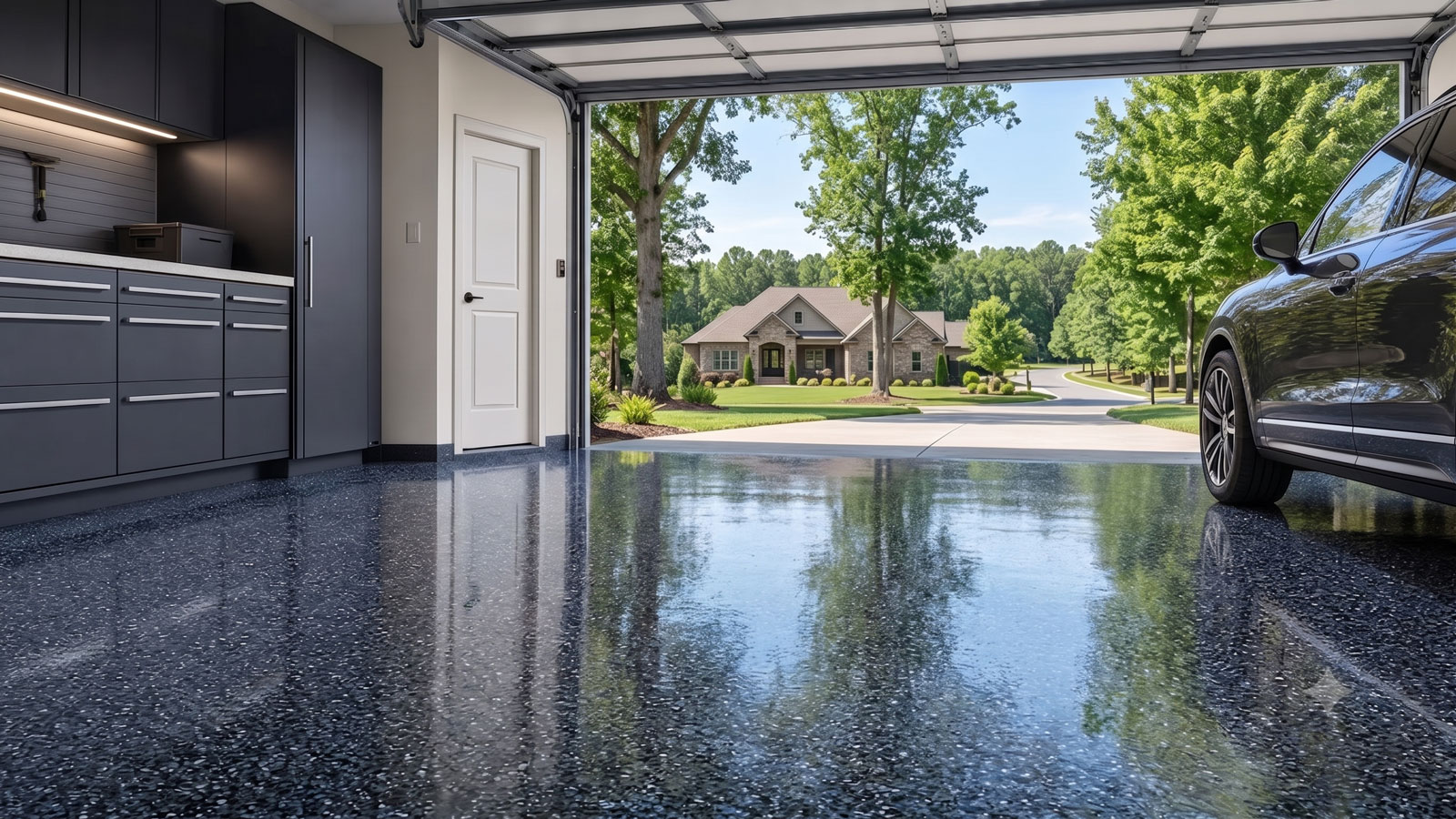
Sound epoxy, polyaspartic and decorative-flake coatings can simplify cleaning when applied over properly prepared concrete. Before comparing appearance or cure speed, identify oil, old paint, sealers, cracks, edge damage and equipment access. A coating cannot correct active drainage or structural movement.
Local Market Insight
Atlanta's Plan A was updated in July 2025, following city plans in 2011, 2016 and 2021. Peachtree Creek infrastructure includes a ten-million-gallon relief tank completed in 2014. Those documented differences make actual slab history and drainage especially important.
What Affects the Cost of Garage Floor Coating in Atlanta?
Two similarly sized Atlanta garages can require different preparation: an older rear structure may need paint removal, patches and limited-access grinding, while a later attached garage may primarily need builder-film removal and joint work.
Regional stormwater investment does not diagnose a private floor. The estimate should distinguish exterior runoff corrections from concrete moisture checks, surface repairs, mechanical profiling and the selected coating layers.
- Garage and slab generations: Atlanta's established districts and later infill include detached, added and recent garages. Inspect actual pour sections, repair history and old finishes rather than estimating labor from the house's original construction date.
- Paint, oil and prior coating: A long-used garage may contain multiple paint layers, previous epoxy or oily patches. Removal and mechanical profiling should expose suitable, sound concrete for the proposed system.
- Peachtree Creek drainage context: Public sewer and stormwater projects document local infrastructure, not private slab moisture. Check roof leaders, driveway slope, threshold stains and actual persistent dampness before specifying repairs.
- Cracks and door-edge damage: Stable cracks, patched sections, spalled entries and moving joints are different problems. An itemized bid should define what can be corrected during preparation and what warrants separate evaluation.
- Urban staging and access: Narrow drives, rear garages, steps and stored equipment affect grinder access, disposal and perimeter work. Include real staging and temporary parking arrangements rather than assuming an open suburban bay.
- Heat, texture and curing: Garage-door sunlight, rainy-season traction and daily use affect finish selection. Confirm compatible primer, base and topcoat layers, installation conditions and manufacturer-based vehicle-return times.
Call for a clear, project-specific estimate — or request one online.
Atlanta's 2025 Plan A and Different Generations of Garage Concrete
Atlanta's Plan A comprehensive development plan was updated in July 2025, following earlier citywide plans dated 2011, 2016 and 2021. The city plans separately for long-established neighborhoods, transportation and infill development. Those planning distinctions explain why the age and layout of garages vary, but they do not identify the slab or coating beneath a particular address.
An older detached structure may contain paint, oily patches and concrete repaired through multiple ownership periods. Another homeowner may have repoured that floor recently. A newer attached bay can be structurally sound yet still contain curing sealer, dense finishing or construction residue that prevents adhesion. Inspect multiple concrete textures, cracks, previous coatings and joints before a contractor specifies a finish.
City lots can also complicate equipment movement and parking. A rear garage reached through a narrow drive may require extra grinding setup, while built-in storage and steps increase perimeter work. Ask what will be stripped, how the slab will be profiled and which defects are included in the repair scope.
Decorative flakes and a compatible topcoat can be useful once the concrete is ready, but neither can stabilize movement nor fix weak preparation. The right Atlanta quote describes the physical floor, not merely the material brand and area.
Peachtree Creek, Atlanta Stormwater and Garage-Level Water Entry
Atlanta's Peachtree Creek basin has received major infrastructure investment, including a ten-million-gallon relief storage tank completed in 2014. Public reports also discuss green infrastructure designed to reduce runoff in parts of that watershed. These specific, dated facts demonstrate regional water-management work; they do not prove flooding or moisture problems at every house near the creek.
Homeowners should trace the actual flow of water around the garage. Does the driveway fall toward the door? Are downspouts discharging onto paving? Does paint peel or concrete remain dark long after rain? Runoff crossing a threshold is not the same as moisture rising through a slab, and neither is the ordinary puddle deposited by a wet car.
Across Atlanta, everyday parking also brings dust, grit, oil and rainwater onto concrete. An intact coating can make cleaning easier than bare porous concrete, but wet-surface traction, sweeping and prompt removal of standing liquids still matter. Sunlight at the open doorway may also affect finish selection.
When outside water enters, resolve drainage or threshold conditions first. When internal concrete moisture is suspected, assess it under the proposed coating system's limits. Then specify removal, grinding, stable crack treatment, joints, primer or base layers, finish texture, topcoat and parking-return time. Public watershed evidence should prompt better inspections, not unsupported claims about private floors.
Frequently Asked Questions
Does Peachtree Creek infrastructure mean my Atlanta garage is damp?
No. Sewer and stormwater projects describe regional conditions. The actual driveway, roof runoff, water-entry history and slab determine whether drainage corrections or moisture assessment are needed.
Are older Atlanta garages automatically too worn to coat?
No. A garage floor may have been repoured, while a newer floor can still retain sealer. Inspect current paint, repairs, soundness and joint movement before choosing preparation.
Can epoxy stop rainwater beneath the garage door?
No. Exterior grade, drainage and threshold problems require separate correction. A decorative coating should follow resolution of active water entry and assessment of the concrete.
What belongs in an Atlanta floor-coating estimate?
Request old-film removal, grinding, cracks and joints, entry-edge repair, any justified moisture testing, complete layer specifications, access logistics, texture and manufacturer-based vehicle-return instructions.
Will a finished floor still need wet-weather cleaning?
Yes. A sound coated surface can simplify maintenance, but grit, oil, standing water and tracked dirt still require regular attention. Keep exterior drainage functioning as well.
Atlanta Neighborhoods & Local Context
Phone Quote Line
Speak with a floor coating specialist about your project and get a realistic estimate range.
(770) 685-6619Typical Project Cost
$3,000–$5,500
Typical range for a two-car garage. Final pricing depends on floor size, concrete condition, prep work, coating type, and finish options.
Helpful Guides
Other Service Areas