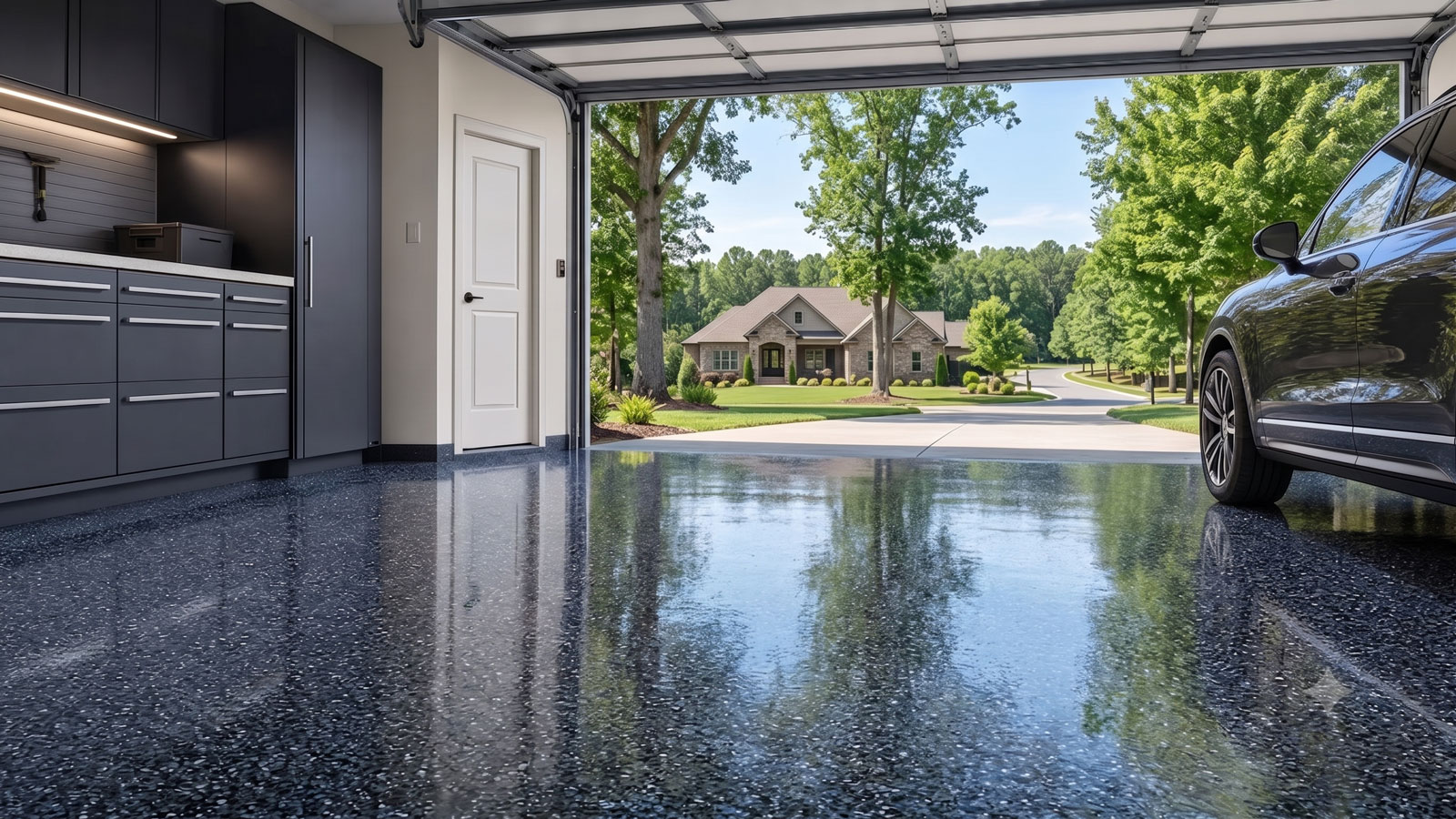
Garage Floor Coating in Alpharetta, GA
Floor Coating Services in Alpharetta, GA
Alpharetta's garage floors reflect a city with a historic downtown, established subdivisions and significant newer development around North Point and mixed-use districts. The Georgia Department of Community Affairs records comprehensive-plan updates in 2016, 2022 and 2026, following earlier 2005 and 2010 planning. Downtown circulation and the North Point Livable Centers Initiative address distinctly different growth settings. These planning histories do not determine whether a residential garage slab was poured with the house, replaced during remodeling or sealed by a builder.
North Fulton waterways and urban stormwater infrastructure create a separate consideration. City planning covers roadway drainage and other public systems, but it cannot show moisture beneath a specific garage or water entering at its doorway. A homeowner should inspect driveway grade, gutter outlets, old paint blistering and persistent dampness. Roof runoff crossing a threshold is not the same as a slab that needs moisture evaluation.
Epoxy, polyaspartic and decorative flake can help homeowners clean sound prepared concrete. The project scope begins with assessing old surface films, cracks, repairs and access, then comparing complete systems and cure scheduling. A coating cannot correct outside drainage or moving structural defects.
Local Market Insight
Alpharetta's formal planning updates include 2016, 2022 and 2026 work, while the Downtown Circulation Study and North Point activity-center plan address different construction contexts. These public facts call for actual garage history and drainage inspection.
What Affects the Cost of Garage Floor Coating in Alpharetta?
A downtown-area garage with older paint, a suburban attached bay with builder sealer and a later mixed-use property can require very different concrete profiling and repairs at the same size. Garage access and stored items also affect labor.
Stormwater and growth maps are background, not moisture diagnoses. Ask the contractor to identify water entry, old-film removal, repairs, coating layers and the time before vehicles may return as separate scope elements.
- Downtown versus later construction: Historic downtown, North Point and established neighborhoods may have garages built or repoured in different eras. Inspect slab sections and earlier repairs before estimating preparation.
- Paint, oil and clear sealers: Previous coatings on a long-used floor and construction treatments on recent concrete can interfere with adhesion. Specify how the existing film will be removed and the slab profiled.
- Threshold runoff assessment: Municipal drainage planning describes shared infrastructure, not private slab moisture. Look at driveway pitch, roof outlets, old water marks and sustained concrete dampness before coating.
- Joint and crack treatment: Stable cracks, spalled edges and moving control joints require different approaches. Ask what will be repaired and what type of movement or deterioration needs separate evaluation.
- Equipment staging: A rear garage, narrow landscaped approach or storage-heavy attached space can add labor for grinder access, masking, perimeter work and temporary vehicle parking.
- Finish, traction and cure: North Georgia humidity, wet tires and sunlight near the doorway affect finish and schedule planning. Check system-specific layers and manufacturer installation and vehicle-return requirements.
Call for a clear, project-specific estimate — or request one online.
Alpharetta's Downtown and North Point Development Differences
Alpharetta's comprehensive planning has passed through updates in 2016, 2022 and 2026, building on earlier work. The city also maintains a Downtown Circulation Study implementing ideas from its 2003 Downtown Master Plan and a separate North Point activity-center plan. Those public decisions recognize that historic-center properties and later commercial or residential districts are not interchangeable building environments.
A house near older downtown streets may have a garage that was added or repoured long after the main structure. A more recent attached space can still carry curing compounds, concrete sealer or a previous floor coating. Inspection should note paint, oil, patches, cracks, joints and any changes in surface texture that signal multiple pours. Neither neighborhood reputation nor home age establishes bond readiness.
Access can affect work on compact lots. Grinding machines, dust-control equipment and materials may need to pass through narrow drives or around landscaping and storage. An estimate should say how old paint will be removed, what profile the contractor intends to create and how damaged edges and moving joints will be handled.
Only after concrete suitability is known should a homeowner compare epoxy, polyaspartic and decorative-flake systems. An attractive finish cannot compensate for failed preparation. The better Alpharetta proposal accounts for the specific garage history, actual labor and realistic return-to-parking time.
North Fulton Rain, Runoff and the Actual Garage Entrance
Alpharetta's stormwater infrastructure and roadway planning serve a city with established neighborhoods, larger commercial corridors and changing activity centers. Those public works are a reason to take rainfall and drainage seriously. They are not proof that any home's garage receives runoff, or that the concrete beneath a particular slab has excessive moisture.
Check the property's own water route. Does the driveway descend to the door, do gutters release water onto paving and have drains become blocked? Look for recurring threshold stains, old coating blisters and dark areas that persist after dry weather. Exterior water crossing into the building, vapor from the slab and a puddle beneath a rain-soaked car each call for different handling.
A sound finished coating can simplify removal of everyday grit, road grime and wet tire marks. But slippery wet finishes and neglected standing water can disappoint. Discuss texture and the ways the household uses the garage, particularly if it doubles as a workshop or storage room.
If there is repeated runoff beneath the door, address drainage or grading before laying down a decorative coating. If the slab suggests moisture problems, use an appropriate evaluation under the chosen product's limits. A detailed quote should then cover cleaning, removal, grinding, crack work, joint treatment, base and top layers, texture and cure time.
Frequently Asked Questions
Does newer Alpharetta construction mean a garage floor can skip grinding?
No. Newer slabs may retain curing compounds or sealers and still need mechanical preparation. The installer should assess the concrete and follow the coating system's substrate requirements.
Does a historic-downtown Alpharetta home always have an old slab?
Not necessarily. A garage may have been rebuilt or repoured after the house. Inspect existing coatings, cracks and repair sections rather than assuming the original building date applies.
Can polyaspartic prevent water coming under the garage door?
No. A decorative system is not exterior drainage. Grade, gutters, drain or threshold problems must be corrected before coating a suitable slab.
What should an Alpharetta floor-coating estimate include?
Request stripping, grinding, crack and joint repairs, doorway edges, justified moisture evaluation, all layers, texture, equipment staging and manufacturer-based return-to-vehicle timing.
How should wet-weather grit be handled afterward?
Sweep abrasive dirt and remove standing rainwater. A well-installed coating can make maintenance easier than bare concrete, but it does not remove the need for cleaning.
Alpharetta Neighborhoods & Local Context
Phone Quote Line
Speak with a floor coating specialist about your project and get a realistic estimate range.
(770) 685-6619Typical Project Cost
$3,000–$5,500
Typical range for a two-car garage. Final pricing depends on floor size, concrete condition, prep work, coating type, and finish options.
Helpful Guides
Other Service Areas